
Content
Computers Stockbroker can analyze market data, identify trading opportunities, and execute trades faster than humans. It enables algorithmic traders to exploit more trading opportunities than manual traders can and leverage probability for a better monetary return. Algorithmic trading works through computer programs that automate the process of trading financial securities such as stocks, bonds, options, or commodities.
Risks and Challenges in Algorithmic Trading
This flaw arises because markets are dynamic, and conditions that existed in the past may not recur in the future. Over-optimized algorithms lack the flexibility to spot algo trading adapt to unforeseen market events, leading to underperformance and increased risk when deployed in real-time trading environments. It enables faster execution of trades by leveraging computer algorithms to monitor and act on market movements in real time, reducing the impact of delays caused by manual intervention.
Building and Testing Trading Models
As a trader, you code these strategies beforehand and then run them through a trading platform or API so they can automatically scan the market and execute trades based on your defined criteria. Unlike other algorithms that follow predefined execution rules (such as trading at a certain volume or price), black box algorithms are characterized by their goal-oriented approach. As https://www.xcritical.com/ complicated as the algorithms above can be, designers determine the goal and choose specific rules and algorithms to get there (trading at certain prices at certain times with a certain volume). Black box systems are different since while designers set objectives, the algorithms autonomously determine the best way to achieve them based on market conditions, outside events, etc.
What is Algorithmic Trading and How Do The Trading Algorithms Work?
Algorithmic trading systems are designed to process vast amounts of market data and execute trades at lightning-fast speeds, often within milliseconds. This rapid execution allows traders to seize opportunities that would otherwise be inaccessible due to the limitations of manual trading. Automated trading, a key part of algo trading, lets traders set specific rules for buying and selling. This approach removes emotions from trading, which often causes rash choices. Rather than depending on human calls automated trading algorithms look at price patterns, market trends, and other key data. Algorithmic trading is the process of using computer programs and defined sets of instructions—algorithms—to execute trades.
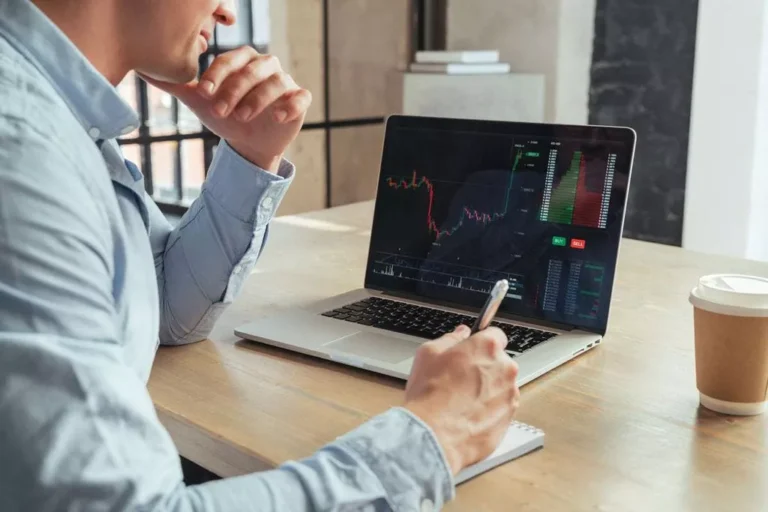

At times, the execution price is also compared with the price of the instrument at the time of placing the order. Computerization of the order flow in financial markets began in the early 1970s, when the New York Stock Exchange introduced the “designated order turnaround” system (DOT). Both systems allowed for the routing of orders electronically to the proper trading post. The “opening automated reporting system” (OARS) aided the specialist in determining the market clearing opening price (SOR; Smart Order Routing). The amount of money needed for algorithmic trading can vary substantially depending on the strategy used, the brokerage chosen, and the markets traded. Profits, however, can be eaten up by platform fees, software subscriptions and potential data requirements for algorithmic trading, which is worth considering beforehand.
Algo trading is widely used across various domains of the financial markets. Hedge funds and institutional investors use it for high-frequency trading, executing thousands of orders in milliseconds to capitalize on small price fluctuations. Algo trading is faster than manual trading being one of the key benefits of this approach. Machines are capable of analyzing large quantities of market data and effect transactions in a matter of milliseconds something that cannot be done by hand. Traders can build strategies using past data, test them to improve their method, and let the algorithm run independently.
In this scenario, our QuantBot pal has made a profitable trade by identifying a quick market trend using data and algorithmic precision. It took advantage of the price surge it helped create, bailing out before the artificial price trend turned back down. This is one of the many ways a quantitative fund can aim to make money using algorithmic trades. Note — the Intergalactic Trading Company’s business results have almost nothing to do with this process.
Having the right tools and resources at your disposal is essential for being successful with algorithmic trading. This strategy often involves monitoring the price movements of specific assets and identifying instances where the price has deviated significantly from its average. Algorithmic trading has revolutionized the way we approach the financial markets. Remember, success in algorithmic trading is a continuous process of monitoring, evaluating, and making necessary adjustments to achieve optimal results.
- A subset of algorithmic trading, high-frequency trading takes the concept to the extreme.
- The only thing that guides the overall trading process is the coded instructions, determining if the buyers’ and sellers’ requirements match.
- The choice of algorithm depends on various factors, with the most important being volatility and liquidity of the stock.
- Automation also allows for efficiency by taking advantage of smaller price movements.
- Thomas J Catalano is a CFP and Registered Investment Adviser with the state of South Carolina, where he launched his own financial advisory firm in 2018.
It is crucial for mechanical traders to have robust risk management systems in place to mitigate and handle potential losses properly during volatile market conditions. During periods of high market volatility, such as economic crises or major news events, prices can fluctuate significantly within seconds. This can lead to slippage (the real enemy here), where trades are executed at prices different from the intended ones. Once the trading models are developed, tested and validated, we can deploy them to our “live” environments to automatically execute trades based on predefined rulesets and parameters. Algorithmic trading, also known as algo trading or automated trading, refers to using computer programs to execute trading strategies.

Algorithmic trading can be used for, among other things, order execution, arbitrage, and trend trading strategies. Advanced NLP techniques enable algorithms to differentiate between noise and meaningful information, ensuring that trading decisions are based on reliable insights. Sentiment analysis, a key application of NLP, helps algorithms gauge investor sentiment in real-time, allowing traders to stay ahead of market trends. The ability to integrate such diverse data sources into trading strategies is a significant leap forward, providing traders with a competitive edge in an increasingly information-driven market. Over-optimization, also known as curve-fitting, is a common pitfall in algorithmic trading. It occurs when algorithms are excessively fine-tuned to fit historical data, resulting in strategies that perform exceptionally well in backtesting but fail in live market conditions.
Traders may, for example, find that the price of wheat is lower in agricultural regions than in cities, purchase the good, and transport it to another region to sell at a higher price. This type of price arbitrage is the most common, but this simple example ignores the cost of transport, storage, risk, and other factors. Where securities are traded on more than one exchange, arbitrage occurs by simultaneously buying in one and selling on the other. As long as there is some difference in the market value and riskiness of the two legs, capital would have to be put up in order to carry the long-short arbitrage position. This increased market liquidity led to institutional traders splitting up orders according to computer algorithms so they could execute orders at a better average price.
These average price benchmarks are measured and calculated by computers by applying the time-weighted average price or more usually by the volume-weighted average price. With a variety of strategies that traders can use, algorithmic trading is prevalent in financial markets today. To get started, get prepared with computer hardware, programming skills, and financial market experience. While we can measure and evaluate these algorithms’ outcomes, understanding the exact processes undertaken to arrive at these outcomes has been a challenge.
In its place, sophisticated, technologically driven automated solutions are emerging. To get a feel for news that can move stocks, we highly recommend Seeking Alpha. Over the next few minutes, we’ll unravel the mysteries of these seemingly complex strategies, delving deep into their building blocks and exploring the tools that make them possible. I very much like the results of this analysis, and now let’s code it and test it on a chart within the platform. Here at tradewithcode, we use a tool called data analyser to analyse huge quantities of data in a matter of minutes, giving us a sort of superpower. During the account setup process, you will typically need to provide personal information and financial details.
